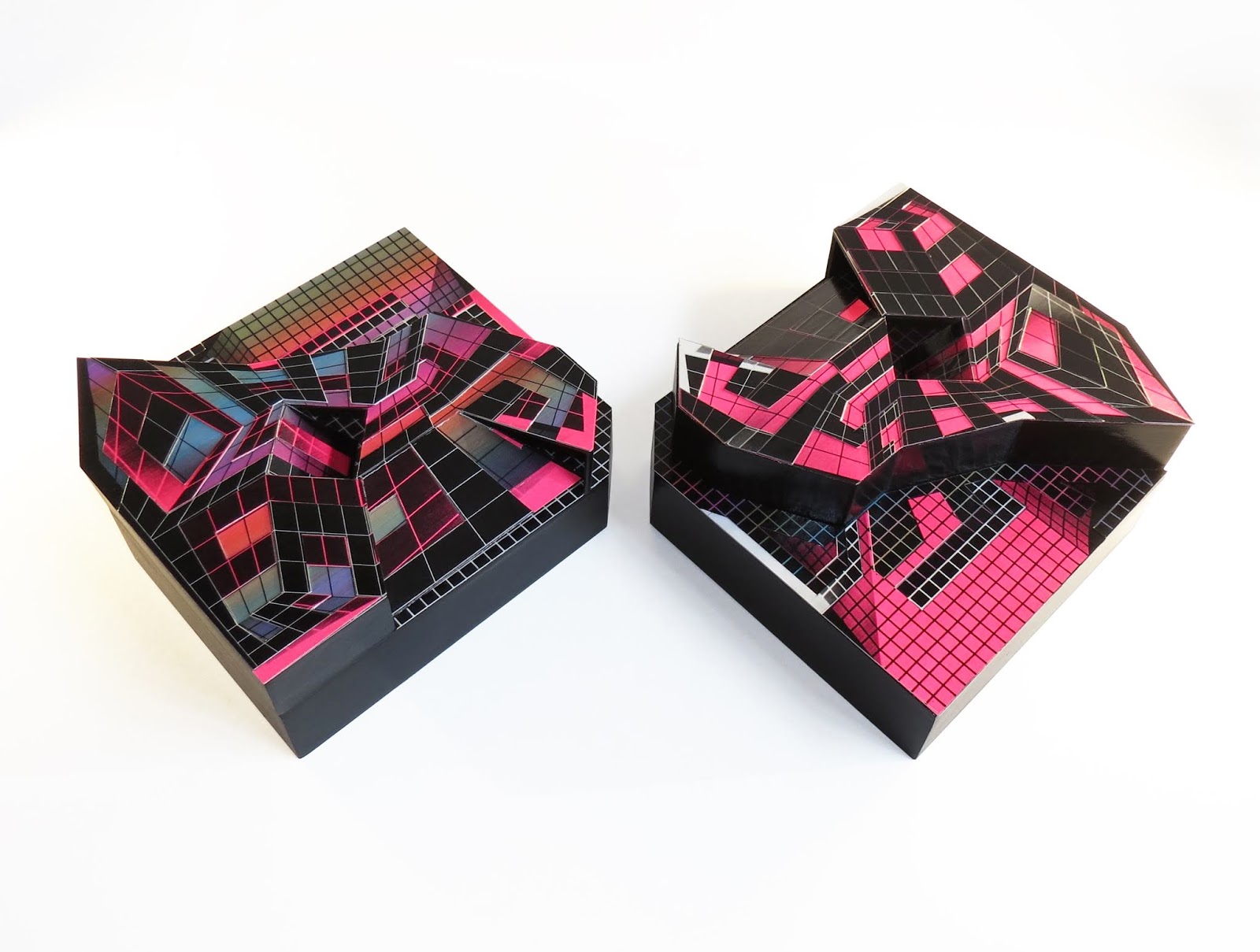
Tuesday, January 16, 2024

"Petroglyph" Painting at Van Der Plas Gallery!


"Petroglyph"
Acrylic on cold press paper
11 in. X 11 in. (Artwork); 1 ft. X 1 ft. (Framed)
2023
$950

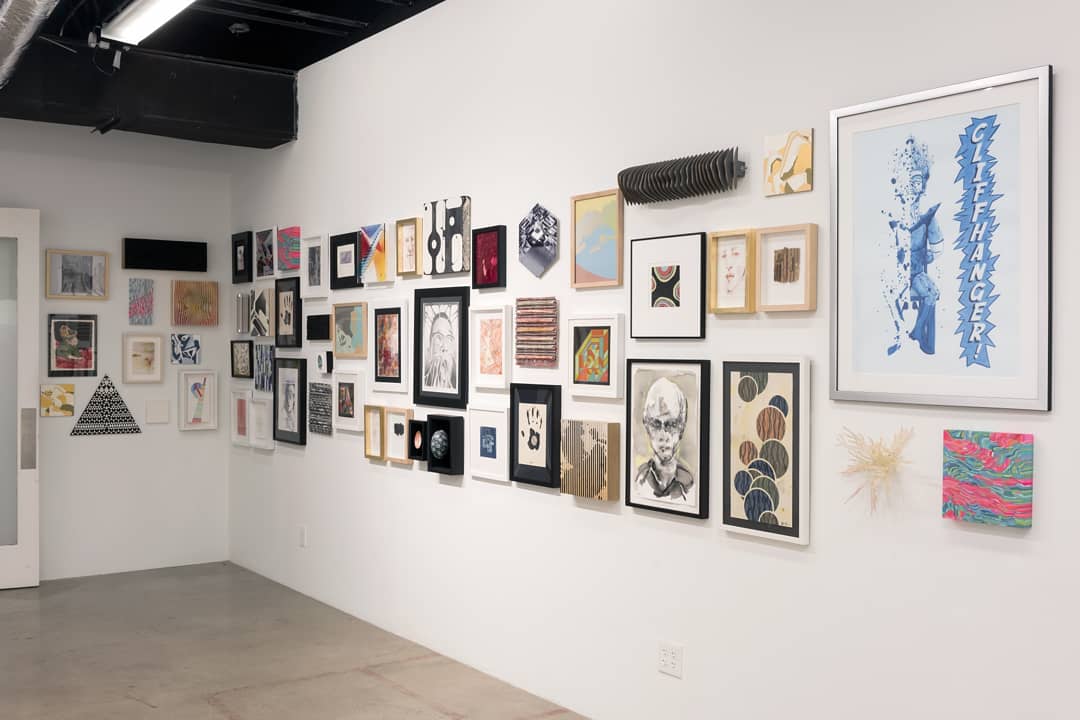
If you’re in NYC this weekend, my painting, titled “Petroglyph”, will be included for sale in the group show, “Impressions En Plein Air” at Van Der Plas Gallery!  


"IMPRESSIONS EN PLEIN AIR" OPENING RECEPTION AND EXHIBIT DATES

The opening reception is on Friday, January 19th, 2024 from 6 — 8 PM EST, and the show runs until January 28th


GALLERY LOCATION AND HOURS

The gallery is located at 156 Orchard Street, New York, NY, 10002 and their open hours are:

  • Monday — Saturday, 11 AM — 6 PM EST
  • Sunday, 11 AM — 5 PM EST

CONTACT THE GALLERY

You can contact the gallery by phone at +1 (212) 227-8983 or by email at adriaan@vanderplasgallery.com

For more information, please visit: https://www.vanderplasgallery.com/

Check out footage from the opening night!


ABOUT THE GALLERY

Originally founded by Adriaan Van Der Plas in Gramercy Park, NYC in the 1980's, Van Der Plas Gallery is an established art gallery now located in the Lower East Side of NYC.

Van Der Plas Gallery brings the lost histories of the Lower East Side and East Village art scene back to life. Fusing Contemporary, Outsider, and Street Art, the gallery is a sanctuary for artists seeking to channel the authentic, unabashed creativity that has blossomed in the neighborhood for generations. By celebrating its important heritage and building upon its foundations, Van Der Plas fosters a community committed to the artists ingrained in the very fabric of the Lower East Side.

While engaging with the important history, Van Der Plas seeks to promote art that lives outside of the traditional canon. Home to artists willing to explore unconventional modes of creativity, the gallery represents artists such as Jean-Michel Basquiat’s partner in graffiti, Al Diaz, notorious downtown art-world scamp and ‘Van Gogh of the East Village,’ Kevin Wendall, aka. “FA-Q”, and subway-card collagist and Artista de la Calle Juan Carlos Pinto.

Work by institutional artists is also an area of focus for the gallery, representing the evocative and sensuous works of Frank Boccio and John Tursi from the Creedmoor Psychiatric Center. Other gallery artists include Argentine art brute and neo-expressionist Alejandro Caiazza and the ever-quirky, autobiographical Canadian multi-media artist Jason McLean.

Monday, January 17, 2022

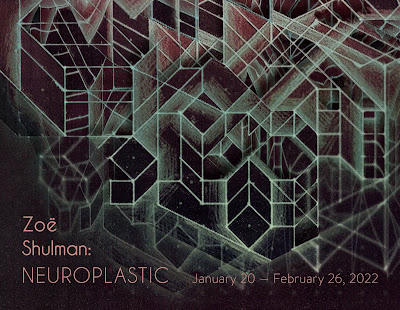
Zoë Shulman: Neuroplastic Opening Reception


Exciting news!  My third solo exhibition, Neuroplastic, will be opening at Camiba Gallery on Thursday, January 20th from 6 PM - 8:30 PM.  Check out more details below:

ZOË SHULMAN: NEUROPLASTIC
Exhibit on view January 20 - February 26, 2022

Opening Reception: 
Thursday, January 20th, 6 PM - 8:30 PM CT

Artist in attendance

Masks are required during the reception


The Gallery is open: 
Thursday through Saturday, 11:00 AM - 5:00 PM

Other times are by appointment through our scheduling tool

You can also book an appointment: 
by calling (512) 937-5921, or emailing Laura@camibagallery.com

About the exhibition: 
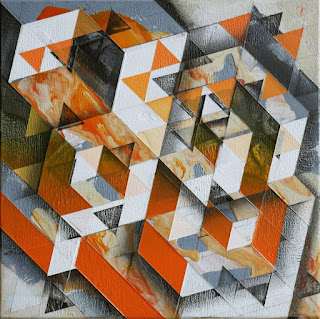
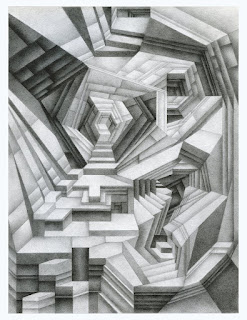
Neuroplastic is a series of visionary paintings, drawings, metal prints, and animations by Austin-based artist Zoë Shulman that employ geometric abstraction to explore the intersections between psychotherapy, psychedelic medicine, and art therapy.  While undergoing cognitive behavioral therapy and clinical Ketamine treatments, the artist created these idiosyncratic artworks as transformational stepping stones on her personal healing journey through PTSD and depression.  Throughout this body of work, special hallucinatory shapes the artist calls “Ketagons” integrate ineffable thoughts and feelings into a complex visual language of soft value gradients, crystalline glazes, colorfully woven lines, fiery paint pours, rhythmic patterns, and labyrinthine illusions.  Altogether, the artist’s unique language reveals her wisdom mind’s deepest existential affirmations, self-evident truths, and spiritual transcendences. 


Come and see exciting new works like "Ketagon VI" (top) and "Ketamine IX" (bottom)!


Wednesday, November 25, 2020

INSIGHT: CAMIBAart Artists' Perspectives on 2020


"The Rosette of Division" by Zoë Shulman

11” x 12.75”; Digital painting and mixed media print on aluminum; 2017

$385

I'm excited to announce that my piece "The Rosette of Division" will be a part of the group show INSIGHT: 2020 at CAMIBAart Gallery!  The exhibition will be on view November 28th - December 26th, 2020.  The gallery remains open by appointment only.  Location: 6448 Hwy 290 E., Suite A102, Austin, TX 78723.


About My Piece: 

The Allegory of Good and Bad Government is a series of twenty digital painting and mixed media works printed on aluminum hexagons called rosettes. The rosettes are arranged as diptychs in which the virtues and vices of American government, expressed as elaborate geometric symbols, contrast chiaroscuros within a candle-lit gallery space. The Rosette of Division is a governmental vice that sows distrust and shatters the Union.


To book an appointment to see the exhibit, please follow the link below: 

>>> http://www.camibaart.com/2020-insight <<<

You can also book an appointment by calling 512-937-5921, 

or emailing Veronica@CAMIBAart.com


About the Exhibition:

Without judgement or expectation, we asked our artists to create a work of art responding to the year 2020.  

We knew the works would be exceptional in both concept and craft – we were not disappointed.  The results can be seen in this exhibition, Insight: CAMIBAart Artists’ Perspectives on 2020, which includes artworks in a wide variety of mediums by 22 artists from the US, Mexico and Cuba.  Many of the artists told us that the process was cathartic, while others found it a pleasant distraction.  Each artist has provided text describing how or why their work responds to this past year.  They address a wide range of topics including: 

the ever-present COVID19 pandemic; isolation; depression; fear; rage; loss of life; loss of connection; social distancing; classism & inherent inequality; the elections; political & social division; minorities’ & women’s rights; social justice; economic loss; environmental concerns; hope for the future; search for calmness & peace; and clarity of vision. 

Please join us in gaining some insight into a few of the ways people have experienced and responded to 2020.  Perhaps you’ll recognize some of the feelings and perhaps you’ll empathize with other’s views.

Thursday, June 25, 2020

"Structure" Catalogue Available!


"Handkerchief I", aluminum print, 1 ft. X 1 ft., 2012
Original artwork for Sale! $325.00

For artwork inquiries, please contact either zoe.shulman.studio@gmail.com or amanda@asmithgallery.com 

From March - May 2020, I was proud to have my work "Handkerchief I" included in the photography exhibit "Structure" at the A. Smith Gallery in Johnson City, Texas.  Now the exhibition catalogue is available!  Check it out on Blurb and view all the talented photographers: 


See page 16 to view my work!  You can also purchase a copy for $40.


Sunday, February 23, 2020

Structure Juried Exhibition

A. Smith Gallery, Photographic Arts

"Handkerchief I", aluminum print, 1 ft. X 1 ft., 2012

For Sale! $325.00

Come and see "Handkerchief I" along with 50 other fantastic photographic works inspired by the theme of structure!

Juror | Bill Schwab
Exhibition dates | March 20 to May 3, 2020
Receptions | March 28 and April 25, 2020 both from 4 to 8pm

103 N. Nugent Ave
Johnson City, TX 78636

Gallery Hours: 
Thursday/Friday/Saturday noon to 6pm
Sunday noon to 3pm
and by appointment

Tuesday, April 30, 2019

Best of the Show Exhibition at Texas State University


Great news, five of my artworks from 120 Art Gallery will be featured in the juried exhibition, "Best of the Show" at Texas State University in Round Rock!  The opening reception is on May 17th from 6 PM to 8 PM.  Exhibition runs from May 4th to July 21st, 2019.  Come and see all the Taylor talent that is 120 Art Gallery!  Please review the inventory sheet of my artworks for sale above.

"Best of the Show"
Texas State University, Round Rock Campus
1555 University Blvd.
Round Rock, TX 78665

Opening reception: May 17th, 6 PM - 8 PM, the artist will be in attendance
Exhibition runs: May 4th - July 21st

Open hours: Located on the 4th Floor of the Avery (Main) Building, open to the public

Friday, April 26, 2019

Fresh Look: A Selection of Women from the MADI Collection

EXHIBIT | FRESH LOOK: A SELECTION OF WOMEN FROM THE MADI COLLECTION
April 26 - July 22
Opening reception: Friday, April 26th, 2019 at 6:00 p.m.

The Museum of Geometric and MADI Art
3109 Carlisle Street 
Dallas, TX 75204
Phone: (214) 855-7802
Website: http://www.geometricmadimuseum.org

Open hours:
Mon-Sat, 11 AM - 5 PM
Sunday, 1 - 5 PM

Admission to the museum is free, but donations are appreciated and encouraged.

This exhibit curated by artist Mokha Laget will feature selections from female artists of the Madi’s collection.  It opens with a reception on Friday, April 26, 2019 at 6:00 p.m. and runs through July 21, 2019.

Great news, "Circuit Topology II" will be featured in "Fresh Look: A Selection of Women from the MADI Collection" at the MADI Museum in Dallas!  To read a full list of the women artists, please click the photos below and view the exhibition catalog.  Check out my work featured on page 2, right next to Bridget Riley!


"Circuit Topology II"
15" X 22"
Acrylic on paper
2015


Monday, April 1, 2019

Cordovan Art School Workshops

Exciting news, I will be teaching art workshops with the Cordovan Art School!  Cordovan has locations all over central Texas and offers workshops in various art subjects.  My first workshop is "Geometric Abstraction" and I will be teaching the art of expressing ideas and emotions through lines and shapes.  In this workshop, you will explore the creation of geometric abstraction through the process of acrylic painting.  Using watercolor paper, you will design and paint geometric compositions in at least two layers that you will be able to take home after just one three-hour session.  No previous experience is required to attend — all you need is an imagination and a desire to express it!

Workshop event details:


Pictured above: an example of the techniques and materials you will employ in this workshop!

"Geometric Abstraction Workshop"
  • $60 registration and supply fee
  • Adult workshop
  • All materials will be provided an no previous experience is required.  The workshop is 3 hours long, so bring a light snack.
  • The workshop will be held on Sunday, May 19th from 2:00 PM — 5:00 PM
  • For further questions or concerns, please email our Workshop Coordinator, Donna Staten: donna@cordovanartschool.com


Friday, March 15, 2019

CAMIBAart: Gallery Warming Party!

I currently have four brand new works on consignment at CAMIBAart!
Come and get them before they're gone!


Gallery Warming Party
Saturday March 30th, 2019
1 PM – 9 PM
With drinks and light bites throughout the day

– NEW LOCATION –

CAMIBAart Gallery
La Costa Business Park
6448 Hwy 290 East, Suite A102
Austin, TX 78723

Camiba Art Gallery has officially relocated to La Costa Business Park and is kicking things off with a Gallery Warming Party!  Come visit on March 30th from 1 PM – 9 PM and enjoy brand new artworks, drinks, and light snacks.  I will be in attendance from 1 PM – 3 PM, so stop by early if you want to see me!

The exhibit includes brand new artworks by:

William T. Carson
Katy David
Orna Feinstein
Lee Albert Hill
Zoe Shulman
Margaret Smithers Crump
...as well as recent works by all other Camiba artists.

Many of the artists will be in attendance throughout the day to celebrate Camiba Art's new home.  Here's the schedule to visit with your favorite Camiba artists:

Zoe Shulman 1pm – 3pm
Edward Lane McCartney 1pm – 4pm
Orna Feinstein 2pm – 4pm
Rachel Kalisky 3pm – 7pm
Katy David 4pm – 6pm

Saturday, January 19, 2019

Big News at Camiba Art Gallery!


Camiba Art Gallery will be relocating and reshaping its practice.  

Read all about the exciting new changes at Sightlines Magazine!  

Please sign up for updates online at Camiba Art.

Zoe Shulman at 120ART!


My work is for sale at the 120ART Gallery in the historic McCrory Timmerman building in Taylor, Texas!  The work is currently on permanent display.  Come on down and visit!

Gallery website
120ART

Location
120 W. 2nd Street
Taylor, TX 76574

Gallery phone and email
(512) 762-8901
tagat120art@gmail.com

Hours
Sunday: Closed
Monday: Closed
Tuesday: Closed
Wednesday: 11AM - 6 PM
Thursday: 11AM - 6 PM
Friday: 11AM - 6 PM
Saturday: 11AM - 6 PM

3rd Thursday: 120ART extends its hours until 9 PM during downtown Taylor’s “Third Thursday” evenings.

Works and prices


Friday, December 7, 2018

Year End Review & Family Salon Wall Reception


Year End Review & Family Salon Wall Reception
Camiba Art Gallery
2832 E. Martin Luther King Jr. Blvd.
Austin, Texas 78702

Opening Reception: Saturday, December 8th, 1 PM — 4 PM
I will be present during the opening reception and have several works for sale!
Runs: This exhibition is currently ongoing
Gallery Hours:
Tuesday through Friday, 10 AM — 5 PM
Saturday, noon — 5 PM
Other times by appointment

We are wrapping up the year with a group exhibit featuring works from each of our 2018 shows, including a massive Salon Wall curated by Associate Director Emerson Granillo with artworks by our CAMIBAart artists.

Come spend the day with us and enjoy Mulled Wine, snacks, and Bourbon Pecan Squares.  The other galleries in the building will be open as well.

ADDED BONUS — you can take your artwork purchases home right away for holiday giving or to enjoying for yourself (no need to wait to the end of the exhibit)!  So come get the works while they are available!

Artists include: Julio Alba, JP Canale, William T. Carson, Camila Castañeda, Robert Jason Cross, Katy David, Leonardo Diaz. Román Eguía, Orna Feinstein, Matthew Gantt, Rebecca Rothfus Harrell, Lee Albert Hill, Rachel Kalisky, Edgardo Kerlegand, Miguel Angel Rivera Lopez, Winston Lee Mascarenhas, Edward McCartney, Alejandra Mendoza , Tahila Mintz, Lorena Morales, Manuel Mugica, Gleider Rodriguez, Michel Muylle, Misha Penton, Beatriz Sala Santacana, Zoë Shulman, Sandra Slim, Charlotte Smith, and Margaret Smithers-Crump

Monday, December 3, 2018

Thank you, Beto!

U.S. Representative Beto O'Rourke with "The Rosette of Hope"

Dear Beto,

I want to thank you from the bottom of my heart for running an incredible Senate campaign and representing the best of Texas.  Your profound integrity, empathy, and commitment to the people of Texas inspired me to get involved in supporting progressive political change.  

During the campaign, I helped host a Beers for Beto fundraiser that coincided with the opening of my art exhibition titled “The Allegory of Good and Bad Government” at Camiba Art Gallery in Austin.  This series of hexagonal prints are arranged as diptychs in which the virtues and vices of government, expressed as elaborate geometric symbols, prompt the viewer to compare idealisms between the work and their own political reality.

Reflecting on these works, I felt that the Beto campaign was a beacon of hope for good government in the face of fascism.  Regardless of wins or losses, I believe this campaign serves as a model for what the rest of the nation can accomplish when Democrats show up and stay true to their convictions of equal opportunity and democracy.  That is why I want you to have “The Rosette of Hope”.  No matter what happens next, may this hope continue to resonate and guide all of us into a better and more representative future.    

For Democracy,

Zoe Shulman

Sunday, October 14, 2018

Fall Exhibit: Shulman, Lamplugh, Hubbard, Allen, Davis


Fall Exhibit: Shulman, Lamplugh, Hubbard, Allen, Davis
(Coinciding with the Transportation Show)
The McCrory Timmerman Galleries
201 Main Street
Taylor, TX 76574

Opening Reception: Thursday, October 18th, 6 PM — 9 PM
Runs: October 18th — December 15th
Gallery Hours: Wednesday through Saturday, 11 AM — 6 PM

I will have 10 works for sale at the McCrory Timmerman Galleries in Taylor, TX for the Fall Group Exhibition!  I will be showing alongside David Lamplugh, Peter Hubbard, Regina Allen, and Greg Davis!  The opening reception is Thursday, October 18th, 6 PM 
— 9 PM.  The exhibition runs until December 15th and will be open during normal gallery hours, Wed to Sat, 11 AM — 6 PM.  Located at 201 Main Street in Taylor, TX 76574.  Come and visit!

List of Artists

Zoe Shulman — https://zoeshulmanstudio.com/
David Lamplugh — http://davidlamplugh.com/
Peter Hubbard — https://rqas.com.au/peter-godfrey-hubbard/
Regina Allen — http://reginaallen.com/Artist.asp?ArtistID=6650&Akey=CD882GNT
Greg Davis — https://gregdavisphotography.com/

Works for Sale (please click image to enlarge list)


Friday, August 10, 2018

The Allegory of Good and Bad Government and the Affirmation of the Moral-Political Self

**This essay is available >>for purchase<< as part of a limited edition >>exhibition catalog<< complete with special artwork photographs and artist information!**


The Allegory of Good and Bad Government and the
Affirmation of the Moral-Political Self
By: Zoë Shulman

“The Allegory of Good and Bad Government” by Ambrogio Lorenzetti, 1339 

Normally, I make colorful post-structural (non-binary) work about emergent truth, contextual meaning, and relativism, as both a critique of modern formalism and a means of providing space for me to exist as a bi woman of Jewish heritage in today’s art world.  But nothing is normal anymore.  The 2016 election changed everything for me, as a whirlwind of neofascism, corruption, and fake news infiltrated our executive branch.  Sadness, fear, and anger consumed me as I strained to make sense of the American political and cultural landscapes.  Within this frustrating “alternative reality”, I wasn’t always sure that two plus two didn’t equal five.  But ultimately clarity prevailed and I knew I had to take a stand.  In that moment, everything became black and white: I was an American and I made the conscious political choice to fulfill my civic duty, however small, to protect democracy and global stability.  And, as an American painter, this meant I had to make political work.

To quell my anxiety, I took refuge in art history and traced the origins of western democracy back to depictions of Greco-Roman government.  During my research, I remembered a medieval fresco by Ambrogio Lorenzetti that I had visited eight years ago during a study abroad program in Sienna, Italy.  “The Allegory of Good and Bad Government” was a stunning sight, with an epic juxtaposition of good and bad government spanning three large walls.  In its composition, civic officers and magistrates are guided by stately figures, angels, and demons.  Other parts of the fresco not depicted here display the effects of good and bad government playing out across the city and country.  As the viewer stands in the middle of “The Allegory’s” moral ultimatum, they are forced to compare idealisms between the work and their own political reality.  In the context of today’s American democracy, the experience evokes a sense of responsibility in determining one’s moral priorities and how they manifest as a political choice with cascading effects.

“The Allegory of Good and Bad Government” by Zoë Shulman 

It was then that the subject had become clear to me: I knew that if I could locate a moral definition of government, I could achieve my political goal of promoting a more ideal democracy.  My process involved translating Lorenzetti’s fundamental allegoric structure into a system of geometric symbolism that could convey a moral American government.  There was only one problem: How do I approach this flat, illusionistic fresco of seemingly dualistic and universally moral subject matter from my post-structuralist position?  I felt conflicted, as if I was arrogantly touting my moral superiority as the epitome of righteousness.  How could I take on such a proposition when the American political landscape has multi-dimensional complexity with connected and contradictory spectrums of truth that are relative to each individual?

Central to my work is the concept that painting, whatever the painter's definition, does not exist in isolation.  I believe that it is relative to the architectonic dimensions of all other media and that there are multiple “right ways” to paint.  Many of my paintings are made without paint, exist within multiple spaces simultaneously, and break down the frame by engaging the viewer’s bodily subjectivity.  For me, the wall presents an oppressive paradigm of purist-modern-formalist-objectivist dogma that has a history of excluding the perspectives of women, LGBT individuals, and people of color.  When I use the wall, it is with extreme caution and my primary intention is to inform the growth of my works off-the-wall.  From this vantage point, making a moral work of art for the wall felt like two plus two suddenly equaled the cow jumped over the moon.

“Electro-Pop Lady Grids” by Zoë Shulman

And then, an epiphany.  Intentionally-political art, regardless of morality or spatiality, is always about perspective, and it pushes back against the white male painter’s narrative of so-called “pure art for art’s sake”.  Furthermore, I realized that Lorenzetti’s “Allegory” was just that — an allegory!  It was not to be taken literally as a universal truth, but rather as his idealized Sienna, in which morality and politics come together to shape our pragmatism and give us a sense of control over the future.  And within the individual’s moral and political subjectivity, duality can exist and achieve affirmation through the frame and flatness.  So then I understood my need to flatten my political work and put it on the wall: I simply needed to affirm my values and locate myself within the larger American political zeitgeist.

Ultimately, we can acknowledge our subjective truth and still accept relativism as a larger condition of that truth.  This is the key to making any work active.  Fascists won’t appreciate the truth in what I'm making, and I think that's incredibly powerful and important at a time when democracy itself is being likened to mere “political correctness”.  For me, this is the real stuff of painting.  Being engaged in painting is more than just medium specificity; it’s a larger conversation about how our experiences get expressed through space, dimension, and surface so that we may delve more deeply into the nature of truth.

The Moral-Political Affirmation as Digital Painting


“Optica” by Peter Paul Rubens, 1613

Digital painting expresses my moral-political affirmation by unapologetically confronting and condemning bad government.  All too often, digital art is mischaracterized as a deceptive medium that lacks handmade authenticity while simultaneously air-brushing the truth.  To the contrary, I believe digital art has historical relevance in today’s political climate and may be used as a form of cultural jiu-jitsu against Vladimir Putin's cyber-warfare.  In relation to geometric abstraction, its smooth, high-gloss, rigidly-flat, pixel-measured, Pantone-charted certainty is what solidifies my work as hyper-intentional, subjective political art.  Desperation and lack of representation drive my need to raise my voice and make an empowering statement.  Thus, the subtle architectonics of hand-painted physicality have no place here.  My goal is to use fixed subjectivity to shine a light through three dimensions and get to the allegoric structure of truth by revealing its flattened shadow.  I believe painting is as much a state of mind as it is a physical act.  By thinking like a painter, I can manipulate light and shadow to render a subjective moral-political truth that holds as much weight as Caravaggio's oily chiaroscuro.

Exhibition Synopsis

Exhibition installation concept sketch

“The Allegory of Good and Bad Government” is a series of twenty digital painting and mixed media works printed on aluminum hexagons.  The prints are arranged as diptychs in which the virtues and vices of government, expressed as elaborate geometric symbols, contrast chiaroscuros within a candle-lit gallery space.  The exhibition’s large centerpiece juxtaposes good and bad government, while smaller meditations of the individual virtues and vices line the gallery walls.  Like a religious shrine, the diptychs offer a space for inner transformation, moral enlightenment, and salvation in the face of fascism.

The goal of this exhibition is to provide a vision of America’s democratic republic that is both morally introspective and politically active.  My process involves translating the fundamental allegoric structure of Ambrogio Lorenzetti’s medieval fresco, “Good and Bad Government”, into a system of geometric symbolism that conveys a moral American government.  Informed by cross-cultural symbols, biblical and religious themes, and the ancient philosophy of alchemy, this geometric symbolism resonates with humanity’s timeless aspirations and fears, prompting the viewer to compare idealisms between the work and their own political reality.

Cross-cultural Symbols

Symbol charts

My system of geometric symbolism is an elaborate democracy that subtly and ethically combines shared design elements from across various cultures to create a contemporary, yet timeless aesthetic.  Throughout my research, I drew inspiration from studying Egyptian hieroglyphs, Hebrew characters, ancient Greco-Roman art, Gothic architecture, Christian symbolism, Hindu yantras, Japanese characters, Medieval torture designs, Native American symbolism, Celtic knots, West African Adinkra symbols, and modern hazard and peace symbols.

Rosette thumbnails

Biblical and Religious Themes

In the process of translating Ambrogio Lorenzetti’s allegoric structure, many biblical and religious themes entered my work.  Akin to the seven deadly sins, the nine vices and their virtuous counterparts construct the moral building blocks of good and bad government.  Altogether, the diptych becomes a metaphor for heaven and hell, in which the morality of government creates a positive and negative reality.  Within my “Allegory of Bad Government”, I related laissez-faire capitalism to the Tower of Babel and used the Eye of Providence as another metaphor to express man’s hubris reaching a pinnacle of power and ultimately sowing division via the unfair allocation of resources.

Compositional concepts

The arrangement of hexagons within my composition forms a large rosette similar to the rose windows of Gothic church interiors.  As a painter, I consider much of my work to function as windows, and with my “Allegory of Good and Bad Government”, I intended to open a holy window and allow a path of light to illuminate a moral narrative.  As an exhibition, the work becomes a candle-lit shrine that evokes moral introspection and political activism.  Drawing inspiration from geometric Hindu yantras used in meditation, I sought to present the work as an open-ended reflection on America’s democratic republic, where the viewer contemplates the morality of their political decisions.

Alchemical Symbolism

I use the philosophical and subversive aspects of alchemy to reference an older, more occult America, in which spirituality is visualized by geometric symbolism.  Throughout history, alchemy has been practiced as a secular philosophy to achieve inner transformation, enlightenment, and salvation.  To disguise themselves from the intolerant church, alchemists developed geometric symbols to share profound esoteric spiritual meaning.  By bringing this hidden language into view as political art, I believe it can aid in an American spiritual revolution that will transform hearts and minds, leading to a moral enlightenment and reclamation of core democratic values.

Rosette illustrations by Franz Sales Meyer, 1898

Perhaps the most prominent symbol within my alchemical vision of America’s democratic republic is the cube-rosette.  Used as ancient motifs in both Eastern and Western art and architecture, rosettes are circular floral designs that often decorate religious shrines and capitol domes.  Intrigued by the rosette’s ability to bridge sacred and governmental themes, I decided it was the perfect architecture for my work’s central composition.  The alchemical cube symbol, which represents the basis for all matter, as well as the throne and highest moral power, was combined with the rosette to become the executive branch, in which Lorenzetti’s nine vices and virtues construct the moral building blocks of good and bad government.  Additionally, the work’s hexagonal format expresses the significance of flattened euclidean space as it relates to using fixed subjectivity to shine a light through three dimensions and reveal the allegoric structure of truth.

Left: Ouroboros illustration by Theodoros Pelecanos, 1478
Right: The infinity loop Ouroboros

Coiling around the rosettes is a serpentine Ouroboros, which entwines the diptych in an infinity loop, symbolizing the eternal death and rebirth of moral government.  The Ouroboros’ head is depicted as a coyote skull, a nod to the Native American totem of paradoxical trickery, shape-shifting, and truth within chaos.  It devours its tail to proclaim the reign of bad government, while the jaws of foreign interference emerge from a pit of shadows, viciously ensnaring the loop and deadlocking the Scales of Justice.  The four- and eight-ring halves within the infinity loop combine with the hexagonal format to illustrate the United States Senate and House of Representatives in their fragile oscillation between good and bad government.

Originally designed as the watchful eye of God in the Great Seal of the United States, the Eye of Providence and its lower pyramid have been reframed to symbolize class power.  Like a capitalist pyramid scheme, a small pinnacle of power profits off the backs of America’s middle and lower classes.  Between good and bad government, the pyramids’ distinct orientations form the alchemical triangles of water, earth, fire, and air.  The water-earth Eye of Providence gazes gracefully upward, sustaining life and growth for the greater majority, while its fire-air counterpart glares wrathfully downward, spreading death and destruction.

The Eye of Providence

Allegorical Textures


Scanned objects

Textures play a vital role in illustrating the metaphors within my “Allegory of Good and Bad Government”.  My process involved collecting and scanning various objects such as a crystal, a glass orb, tree leaves, ammonite fossils, petrified wood, rattlesnake skin, and a coyote skull.  Working in Adobe Photoshop with painterly layers of these digital textures, I created illusions that provide a sense of mass through which paths of light illuminate a moral narrative.

My layering process in Adobe Photoshop

Using objects with varying degrees of transparency was key in guiding the light through this narrative.  For example, the crystal glows with divinity throughout good government as a metaphor for governmental transparency and integrity.  This is echoed by the glass orb, which functions as a political pendulum that illustrates a healthy transition of power within the legislative branch.  Within bad government, the crystal becomes shiny objects that mislead the viewer through a maze of immoral shadows.  The immoral pendulums originate from atop the Eye of Providence, plummet down through the United States Senate and House of Representatives, and weigh down the Scales of Justice, reducing them to a stagnant anarchy.

In contrast, pulsing tree leaves form the living-breathing frame of the United States Constitution.  The frame’s glowing edges expand to encompass a greater majority and achieve a more perfect union against the fossilization of originalist dogma.  Ancient ammonites and petrified wood calcify throughout bad government’s brittle, decaying constitution as rattlesnake scales slither ominously through the shadow America.  For now, the Ouroboros has completed its revolution in darkness, but the ever-ravenous jaws of the coyote skull slouch towards the truth within chaos.

* * *

“The Second Coming” by W.B. Yeats, 1919

Turning and turning in the widening gyre
The falcon cannot hear the falconer;
Things fall apart; the centre cannot hold;
Mere anarchy is loosed upon the world,
The blood-dimmed tide is loosed, and everywhere
The ceremony of innocence is drowned;
The best lack all conviction, while the worst
Are full of passionate intensity.

Surely some revelation is at hand;
Surely the Second Coming is at hand.
The Second Coming! Hardly are those words out
When a vast image out of Spiritus Mundi
Troubles my sight: somewhere in sands of the desert
A shape with lion body and the head of a man,
A gaze blank and pitiless as the sun,
Is moving its slow thighs, while all about it
Reel shadows of the indignant desert birds.
The darkness drops again; but now I know
That twenty centuries of stony sleep
Were vexed to nightmare by a rocking cradle,
And what rough beast, its hour come round at last,
Slouches towards Bethlehem to be born?


All historical works are in the public domain. 
All original artwork and essays © 2017 Zoë Shulman.  All rights reserved.